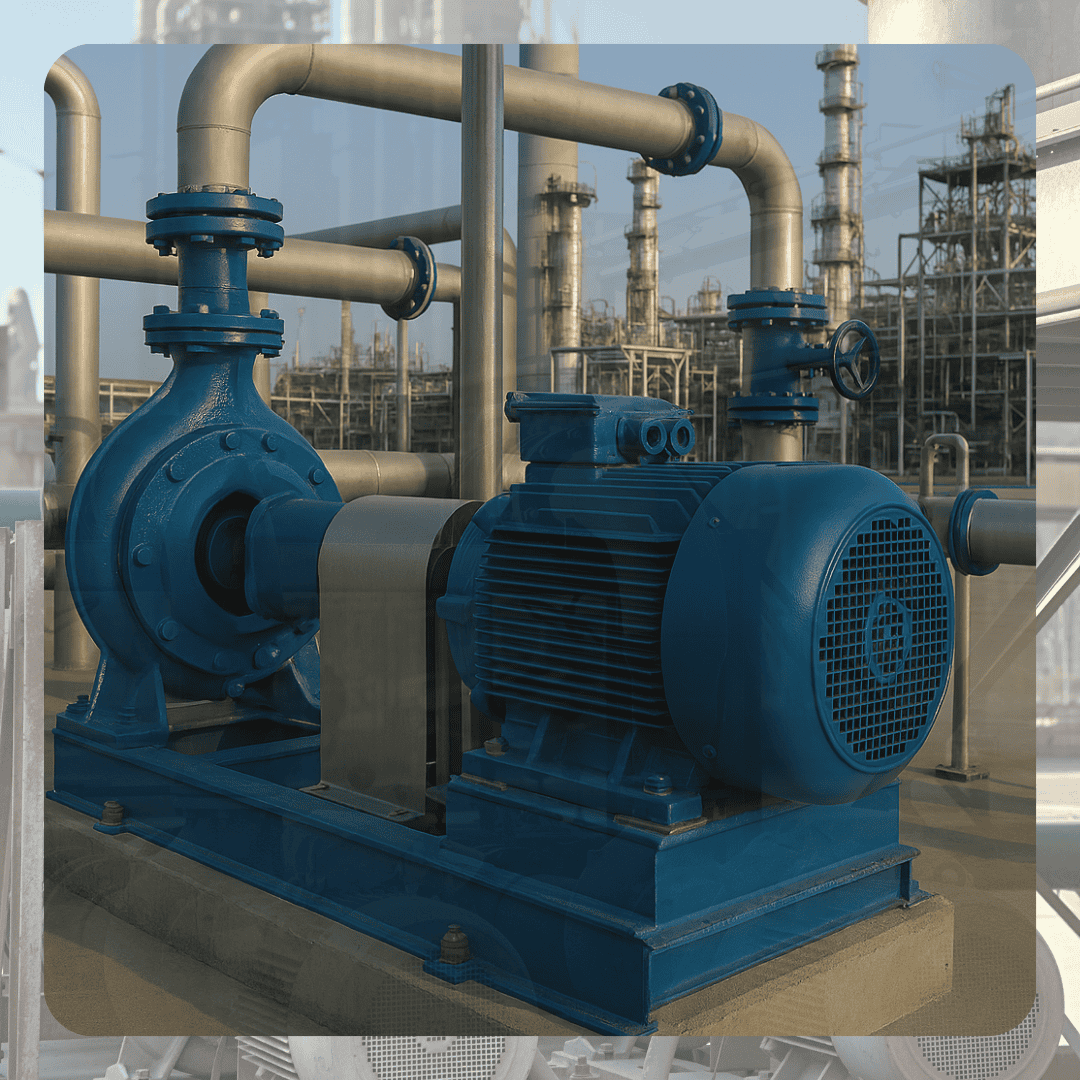
Pump capacity simply means how much liquid a pump can move in a given time. In process design, engineers calculate pump capacity to make sure the pump can supply the right amount of fluid to the plant equipment.
Two things decide pump capacity:
1- Flow Rate (How much liquid is needed)
Flow rate is the amount of liquid the process requires.
Example: A system may need 20 cubic meters per hour (m³/hr) of water.
This becomes the basic pump capacity.
2- Total Head (How high and how hard the pump must push)
Head means the total resistance the pump must overcome. It includes:
• Height difference between tanks
• Pressure difference
• Friction loss inside pipes
• Losses in valves and fittings
When engineers add all these together, they get Total Dynamic Head (TDH).
Final Pump Capacity = Flow Rate + Head Requirement
If the flow rate is correct but the head is too low, the pump will not deliver the required liquid.
If the head is correct but the flow rate is low, the process will not run properly.
So both must be calculated carefully.
Short Summary
Pump capacity is calculated by finding the flow rate needed by the process and the total head the pump must overcome. Flow rate tells how much liquid is required, and head tells how much pressure or height the pump must handle. Together, they decide the correct pump size for safe and efficient plant operation.
|Pump Design Course|
|Process Design Course in Vadodara|
|Chemical Process Engineering Course|