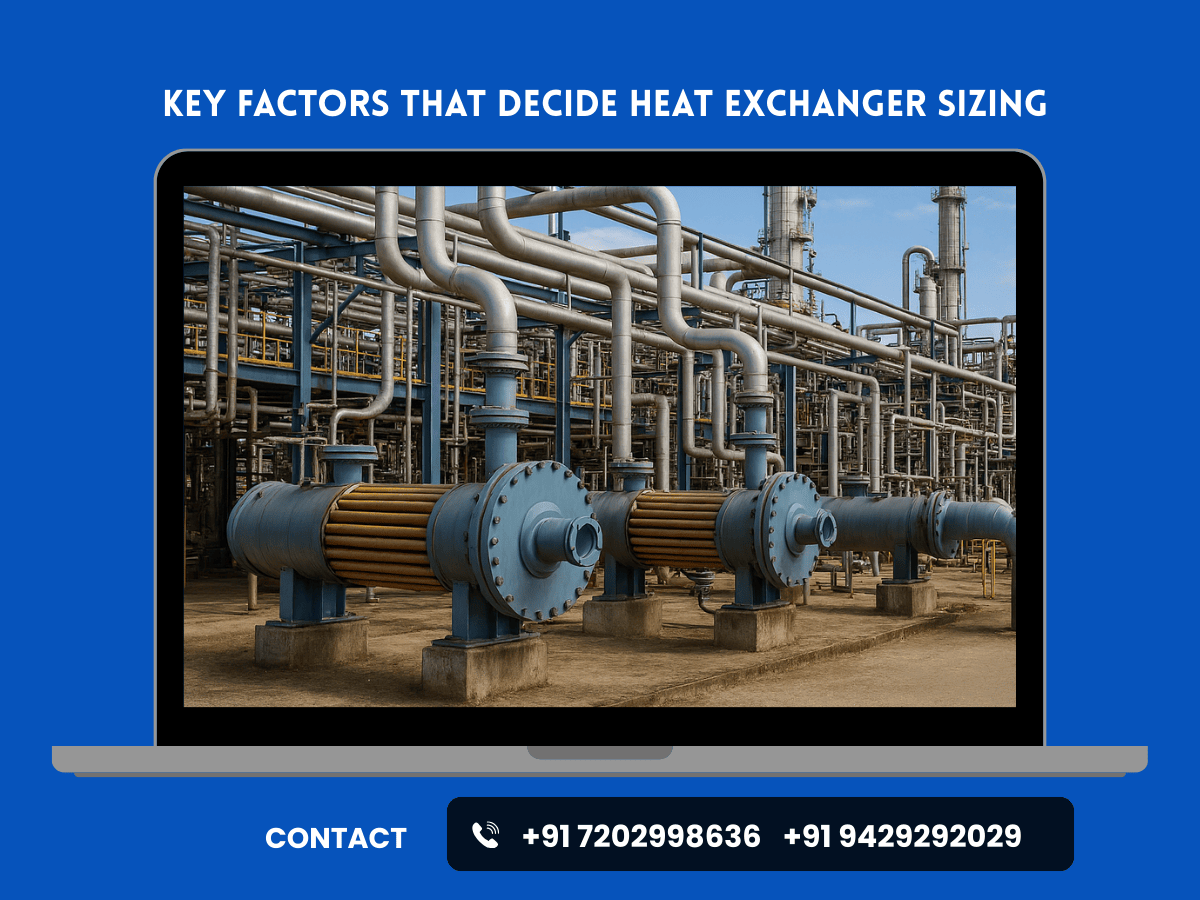
Key Factors That Decide Heat Exchanger Sizing
1) Heat Duty (Q): Amount of heat to be transferred. Higher duty → bigger exchanger.
2) Fluid Type: Viscosity, thermal conductivity, and fouling tendency affect size.
3) Temperatures: Greater temperature difference → smaller size. Engineers use LMTD.
4) Flow Rates: Higher flow → better heat transfer but may increase pressure drop.
5) Pressure Drop Limits: Low allowable drop → larger exchanger needed.
6) Fouling Factor: More fouling expected → add safety margin to surface area.
7) Heat Transfer Coefficient (U): Lower U → larger area required.
8) Exchanger Type & Material: Shell & tube needs more space than plate type. Material affects thickness and performance.
9) Design Standards (TEMA/API): Safety, corrosion allowance, and mechanical layout influence final size.
Want to master process design, heat exchanger design, or mechanical design of heat exchangers?
At Petromech Institute, we offer in-depth, industry-focused training led by seasoned experts from top global MNCs. Whether you’re aiming for oil & gas, chemical, or power sector excellence, our hands-on sessions and real-world case studies will equip you with the skills to design, analyze, and optimize heat exchangers with confidence. Join Petromech Institute and take your engineering career to the next level with practical knowledge that delivers results.
|Heat Exchanger Design|
|Mechanical Design of Heat Exchanger Design|